Not everyone is born with compassion. The ability to feel deeply for someone’s misfortune or pain is a hindrance for some, while for others, empathy is like watching a flower bloom.
The urge to help is in your DNA. You feel good, right? It’s one of those base emotions that instantly creates an almost natural high.
Sadly, kindness is waning. Several years ago, the Joseph Rowntree Foundation published Contemporary Social Evils. The paper argued that a dangerous erosion of trust and a culture of fear pervades our society.
In a think piece for The Guardian, foundation head Julia Unwin voiced real concern. She worried that society now values productivity over kindness and compassion.
The Dalai Lama once said, “To make others happy, practice compassion. To be happy yourself, do the same.” There’s no ifs or buts when it comes to happiness, and it’s not mutually exclusive from practicing compassion either.
If you’re someone who has an empathetic bone, here’s why caring for others feels good.
Why We Resist Caring
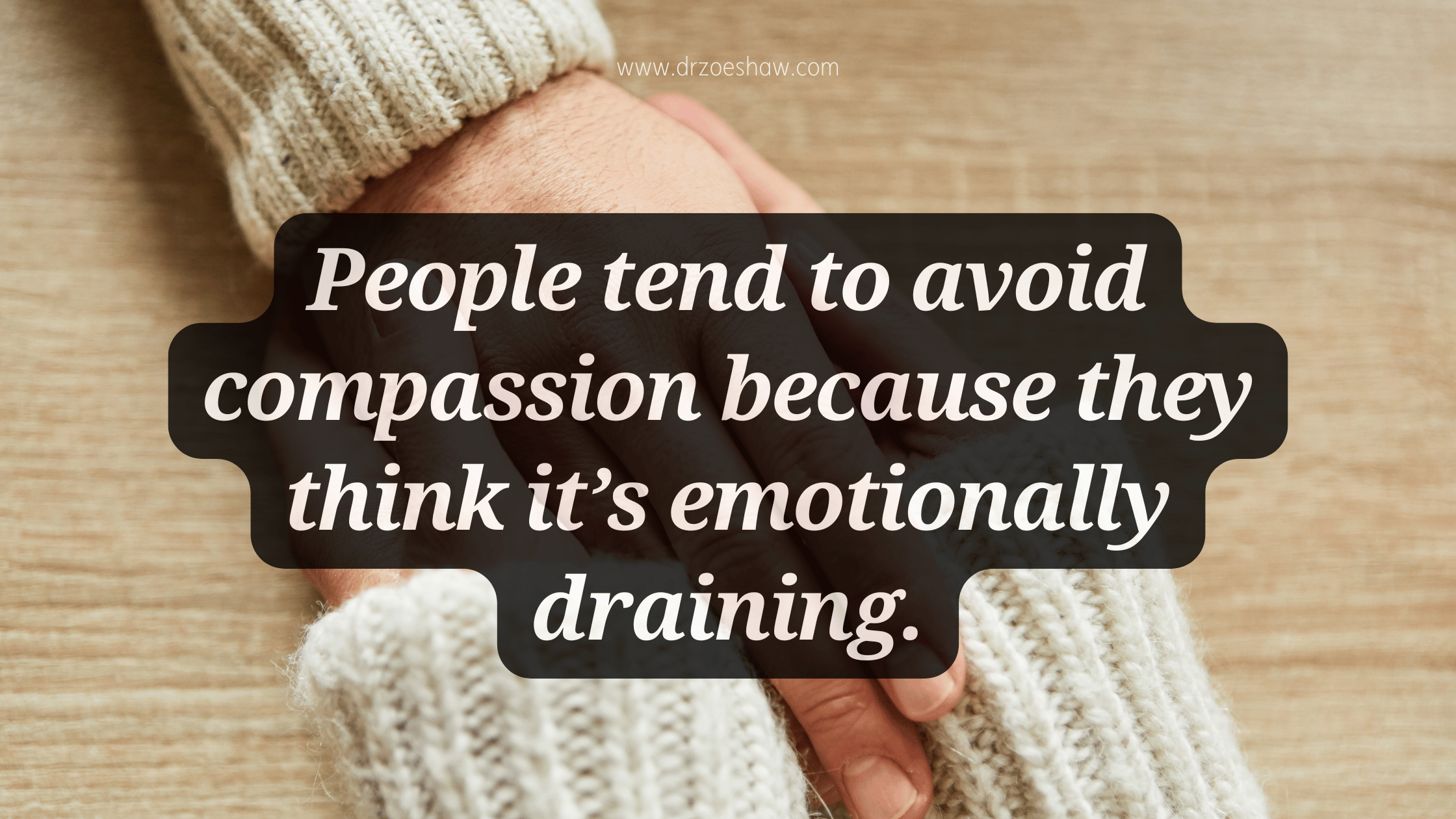
It turns out that caring can feel like work for some of us. People tend to avoid compassion because they think it’s emotionally draining.
We fear that if we open our hearts, we’ll get overwhelmed. And honestly? That’s not far from the truth. When life already feels heavy, it’s hard to open up to someone else’s pain.
Or you might start feeling numb or disconnected, like you’ve stopped caring altogether. Verywell Mind calls this emotional shutdown a red flag. It’s your brain’s way of saying, “I’m out of fuel.”
The solution isn’t to care less but to care smarter.
When Compassion Becomes a Calling
Some people feel this pull so deeply that they make it their life’s work. That’s the essence of a career in nursing. You’re turning care into a job that changes lives every single day.
Nurses don’t only perform clinical tasks. They’re comforting the sick, supporting families, and offering hope in a desperate situation. They are there when people struggle with pain and heal.
For anyone drawn to helping others, an accelerated Bachelor of Science in Nursing (BSN) can open the door to a career rooted in empathy, explains Keypath Education.
And that’s only the start. Many nurse practitioners further their studies and go on to become advanced practice registered nurses or clinical nurse specialists.
A nursing career can morph into a master’s degree or even an associate degree. Nursing specialties are some of the most sought-after jobs out there. And the best thing is that you’re doing what you love. Not a lot of people can attest to that.
The Link Between Empathy and Compassion
Empathy and compassion aren’t the same thing.
Empathy and compassion differ. Empathy mirrors another’s emotions. You see a friend cry, and you feel their sadness in your chest.
Compassion goes further. It’s empathy in action. And that’s where the magic happens because taking action gives meaning to our emotions.
The Conversation clarifies that this ability to understand and respond to others’ feelings is the foundation of community. Without it, we lose our humanity, and we need that now more than ever.
Why Caring Is Good for Your Mental Health
Compassion acts like a reset button for your emotional state. It shifts focus away from your own problems and reminds you that everyone’s carrying something.
Mindful.org describes compassion as a practice that strengthens emotional resilience.
And that strength makes us better partners, friends, and parents. It helps us navigate the chaos of life with more calm and clarity.
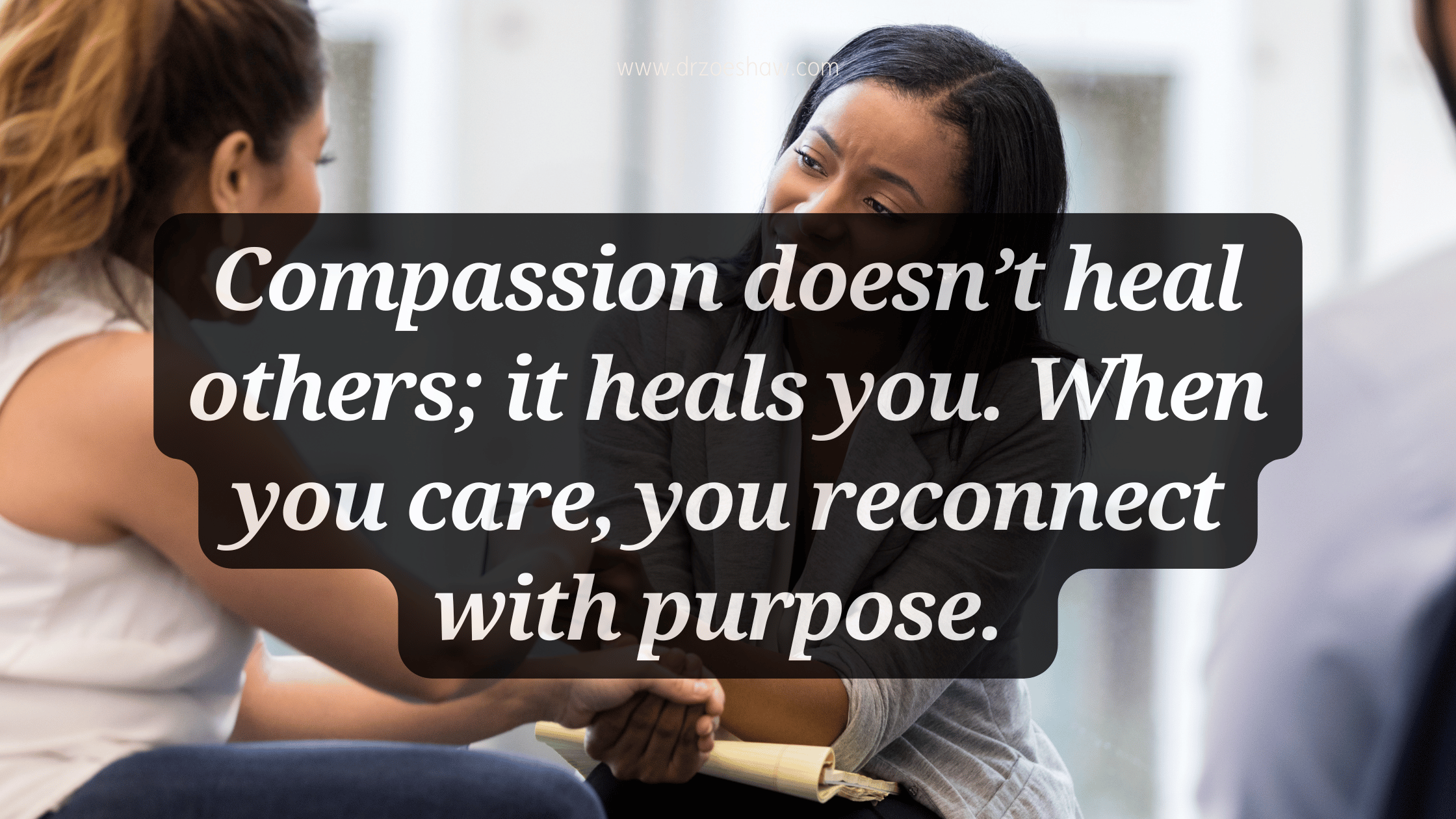
Compassion doesn’t heal others; it heals you. When you care, you reconnect with purpose. You remember why you’re here.
The Ripple Effect
Compassion doesn’t stop with one act. Kindness inspires kindness. Science calls it “emotional contagion.”
It’s the idea that your emotional energy (positive or negative) spreads to those around you. So when you’re calm, patient, and compassionate, it helps everyone in your orbit breathe easier.
Think of it like emotional dominoes. One small act of care can change the entire chain reaction of someone’s day.
Caring Heals Us All
We live in a world that glorifies hustle, when we’re built for connection.
Every time you choose compassion, you’re building that connection. You’re saying, “I see you. You matter.”
And remember, as much as you show compassion to someone, it’s vital to be gentle with yourself. It’s called self-care and self-compassion. Treat yourself with kindness, understanding, and acceptance, because you can’t help others if you are pouring from an empty cup.
Subscribe and Heal your Relationships.
You deserve a healthy, loving relationship and it starts with You. Learn how to untangle
Complex Shame™ and co-dependency to finally have the beautiful, secure relationship with
yourself and others that you’ve always wanted.
Subscribe and as a thank you, I’ll send you the Steps to Healing from Complex
Shame™.